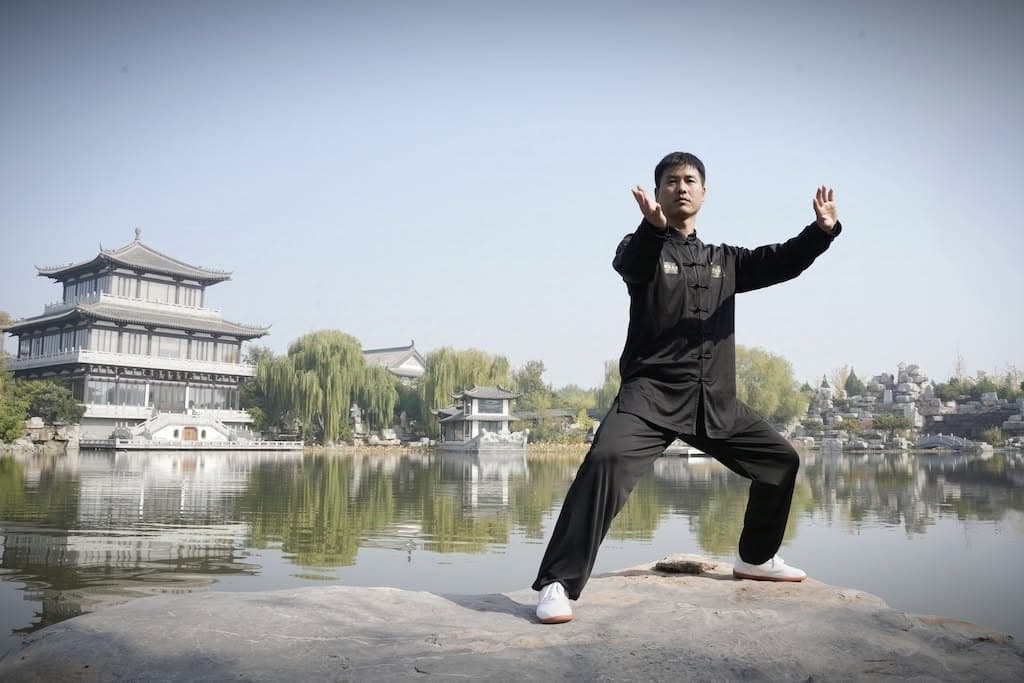
Tai Chi is an ideal practice for lifelong physical activity. The concept of lifelong fitness emphasizes the continuity of exercise across different ages and life stages, representing an evolving process that adapts with time. Tai Chi perfectly aligns with this developmental need, meeting exercise requirements throughout various phases of life. People of all ages and genders can select suitable Tai Chi styles based on their individual conditions. Once proficiency in one style is achieved, learning other variations becomes more accessible, enabling practitioners to transition between different forms as needed throughout their lives for enduring benefits.
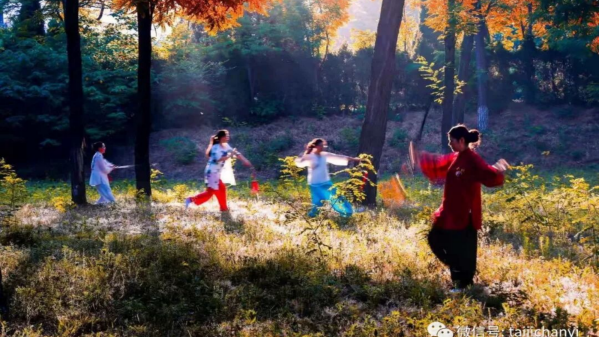
1. Holistic Health Benefits
Tai Chi is a comprehensive exercise that cultivates both internal and external well-being. Long-term practice not only maintains physical fitness but also helps prevent and alleviate illnesses, thereby promoting longevity. Traditional Chinese philosophy holds that human vitality stems from essence, energy, and spirit, where imbalances in Yin-Yang or Qi-blood relationships lead to illness. Tai Chi practice enhances the functions of both motor and sensory nervous systems.
Each posture and limb movement in Tai Chi follows specific principles, with defined requirements for advancing, retreating, rising, falling, opening, closing, relaxing, and tightening. Through sustained, rhythmic practice, practitioners develop improved muscle elasticity, internal strength, powerful limbs, and flexible joints, particularly benefiting lower-body agility. The practice significantly contributes to brain function regulation and development.
During practice, mental focus is essential: intention guides energy, energy drives force, and force moves the body. The body follows intention, achieving internal and external harmony (internal harmony unites intention, energy, force, and spirit; external harmony coordinates hands and feet, elbows and knees, shoulders and hips). Movement initiates from the feet and manifests in the hands - when one part moves, all parts move; when one part rests, all are still. The entire body operates as a cohesive unit, with hands, eyes, body, techniques, and steps moving in perfect coordination.
The principle of using stillness to counter motion and anticipating opponents' movements enhances balance capability. The continuous adjustment between cerebral cortex excitation and inhibition provides excellent training for the central nervous system, making Tai Chi particularly effective against conditions like neurasthenia, insomnia, dizziness, and hypertension. Additionally, Tai Chi promotes metabolism, increases oxygen intake, and improves cardiac function. With the waist serving as the command center and constant mental focus on waist movement, combined with repeated waist rotations and diaphragmatic breathing, Tai Chi enhances gastrointestinal peristalsis, ensuring smooth blood circulation through respiratory, digestive, urinary, reproductive, and circulatory systems.
Named after the traditional Chinese philosophical concept of Yin and Yang emerging from Tai Chi, the practice involves regulating mind, body, and breath. This process actively enhances the relative balance of Yin and Yang in the body while promoting stable coordination between organ and meridian functions, continuously improving overall health. The emphasis on "using intention to guide energy, and energy to move the body" represents Tai Chi's distinctive characteristic that sets it apart from conventional exercises. Through the three regulation methods, practitioners achieve proper body alignment and smooth energy flow, fully mobilizing internal potential to achieve fitness, prevention, and therapeutic goals.

2. Self-Defense Applications
In self-defense and combat, Tai Chi demonstrates distinctive characteristics. Its principles involve using stillness to counter motion, softness to overcome hardness, yielding to opponents' force, and avoiding substantial attacks while targeting insubstantial openings, leveraging opponents' strength to generate counterforce. Therefore, Tai Chi emphasizes self-defense skills of "listening jin" (sensing force) and "understanding jin" (comprehending force).
Upon contact with opponents, practitioners can accurately sense and judge incoming force, then quickly prepare responses while maintaining psychological advantage. When opponents' force arrives, practitioners can preempt it, embodying the Tai Chi principle: "If opponents don't move, I don't move; if opponents move, I move first." This represents the philosophy of non-aggression unless attacked, then subduing opponents effectively. Tai Chi also emphasizes "leading inward to fall into emptiness," where opponents' attacks are met with feints, drawing them into traps to lose balance and disperse their force, thereby creating openings for counterattacks.
In close-quarters self-defense, common techniques include the eight fundamental methods: Ward Off (Peng), Roll Back (Lu), Press (Ji), Push (An), Pluck (Cai), Split (Lie), Elbow Strike (Zhou), and Shoulder Strike (Kao). When maintaining distance, practitioners can employ single-form techniques as opponents advance, such as Parry and Punch (Ban Lan Chui), Punch to the Crotch (Zhi Dang Chui), Wild Horse Parts Its Mane (Ye Ma Fen Zong), and Step Up to Seven Stars (Shang Bu Qi Xing). For longer distances, leg techniques like Heel Kick (Deng Jiao), Separate Kick (Fen Jiao), Lotus Kick (Bai Lian Jiao), and Sweeping Kick (Sao Tang Tui) can be utilized.
It should be noted that applying Tai Chi for self-defense requires substantial skill development. As the classic text states, "Respond quickly to quick movements, respond slowly to slow movements," but opponents can be unpredictable, alternating between substantial and insubstantial attacks. Relying solely on using stillness to counter motion may sometimes prove disadvantageous. Therefore, beyond practicing forms and push-hands, training in Tai Chi breaking techniques and free-hand applications is necessary to develop comprehensive self-defense capabilities.

3. Benefits for Daily Life and Work
Since Tai Chi practice requires complete concentration, using intention rather than brute force, and involves whole-body coordination where movement in one part affects all others, long-term systematic practice helps individuals maintain focus in professional settings, remain undisturbed by external distractions, and preserve physical and emotional stability even in challenging environments. In occupational contexts, particularly physical labor, it can transform isolated, localized movements into integrated whole-body motions, effectively preventing localized fatigue and tension.
The constant requirement for physical relaxation in Tai Chi practice carries over to work situations, promoting overall bodily ease and joint agility. This not only enhances work efficiency but also significantly reduces stress associated with demanding tasks. While Tai Chi skills don't directly relate to professional techniques across various industries, having a Tai Chi foundation can facilitate learning other specialized skills, saving considerable time in mastering and enhancing one's professional craft.
The movement characteristics and essential principles of Tai Chi are refined and accumulated from long-term practical life experience. Originating from daily life, it in turn provides valuable assistance and convenience for people's actual living and working conditions.